

 Share
Share 



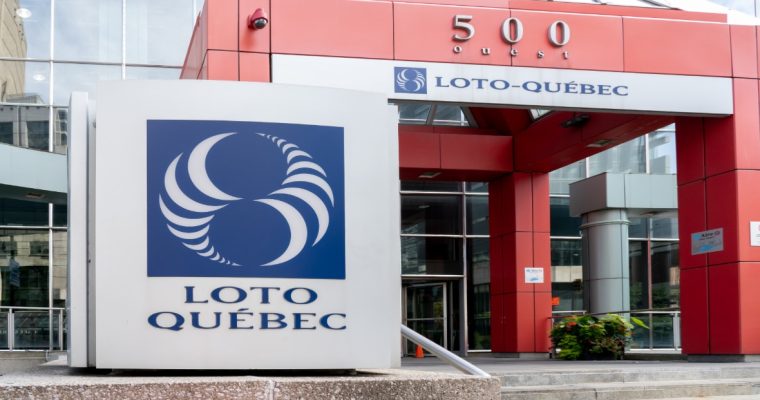
Loto-Québec surpassed $3 billion in total revenue for the first time in its history in 2025-26. It generated $1.5 billion in net income and extended a multi-year run of strong financial results.
Loto-Québec also paid out a record $1.9 billion to lottery winners and created 111 new millionaires across the province.
Loto-Québec’s latest results show the performance of channelization. Québec continues to channel online gambling through a government-operated monopoly. Meanwhile, Alberta is preparing to launch a competitive market modelled largely on Ontario’s framework.
Three Provinces, One Goal, Different Strategies
Québec, Ontario, and Alberta are all pursuing channelization, but they have taken very different paths.
Québec relies on a single government-operated platform. Loto-Québec serves as the province’s sole regulated online gambling provider. Private operators do not compete for market share.
Loto-Québec President and CEO Jean-François Bergeron recently summarized the corporation’s philosophy. The corporation is focused on “capturing the market rather than stimulating its growth,” he said.
Ontario, however, took the opposite approach. The province launched its regulated market in April 2022. This move opened the door to private competition.
More than 40 licensed operators now compete across Canada’s online casino, sports betting, and poker sectors. The expectation was that consumer choice and competition would attract players away from offshore sites more effectively than a monopoly model.
The Alberta iGaming sector is preparing to follow a similar blueprint. Dozens of operators have already secured approvals ahead of the July 13 launch. However, more are expected to enter the market over time. Like Ontario, Alberta is relying on competition rather than a government monopoly to drive channelization.
What The Numbers Actually Show
Loto-Québec reported that 81{76d5cd558181903a8439e76fe460768495b0c497963d73af0e5c1b5c9edbc5ee} of Québec’s online players use its regulated platform. At the same time, recent Ipsos research found that 91.1{76d5cd558181903a8439e76fe460768495b0c497963d73af0e5c1b5c9edbc5ee} of online gamblers used regulated Ontario casino sites.
The figures are not directly comparable. They come from different markets and methodologies. However, both suggest high levels of participation in regulated gambling.
Where Québec’s model makes a particularly strong case is in the visibility of its public returns. The corporation’s $1.5 billion in net income is entirely reinvested in the province.
Loto-Québec also reported $442 million in payroll, $324 million in commissions paid to retail partners, $36 million directed towards problem gambling prevention initiatives, and $18 million in donations and contributions to non-profit organizations.
The scale of the operation is reflected in its revenue mix. Casinos and gaming halls generated $1.3 billion during the fiscal year, lottery games contributed $995.6 million, and gaming establishments added another $814.5 million.
In a competitive market such as Ontario’s, economic benefits are spread across numerous private operators. Public returns still exist. They flow through taxes, licensing arrangements, employment, and broader economic activity, but not through a single government-operated entity.
Loto-Québec is also continuing to invest in physical infrastructure. Projects include a new gaming hall in Saguenay, a planned facility in Rimouski, a hotel adjacent to Casino de Montréal, and an expansion of the conference centre at Hôtel-Casino du Lac-Leamy.
Alberta Is About To Test The Alternative
Alberta will not have a dominant government-operated platform. Instead, it will rely on licensed private operators to attract players away from offshore sites and into the regulated market.
Ontario’s experience suggests that the process can take time. Its current participation figures were achieved after several years of market development, operator investment, and consumer adoption. However, the province’s results also suggest that competition can produce high levels of channelization.
Whether Alberta follows a similar trajectory remains to be seen. Achieving strong channelization in a competitive marketplace would strengthen the case for Ontario’s model. Alberta has yet to prove it can deliver on both fronts. Continued high participation rates and substantial public returns in Québec would provide supporters of the monopoly approach with evidence of their own.
For now, Loto-Québec’s record year is one of the strongest recent arguments for the monopoly model. Alberta’s launch will provide another opportunity to see how a competitive market measures up.