
 Share
Share 



The Alberta online casino market is moving closer to launch. Beyond that, its framework and an ongoing Supreme Court Case on cross-border liquidity raise a bigger question about what the market could ultimately become.
That raises a practical question for bettors. Will Alberta operate as a closed system, or could it eventually tap into a broader pool of players? A decision at the country’s highest court will answer those questions.
Alberta’s iGaming Market Structure
Alberta uses a two-step model. The Alberta Gaming, Liquor and Cannabis Commission (AGLC) handles licensing and compliance, while the Alberta iGaming Corporation (AiGC) oversees operator agreements. Platforms can go live starting July 13 once both steps are complete.
What sets Alberta apart is flexibility. The framework allows agreements with other provinces and takes a conditional approach to out-of-province players. This means access depends on whether it is legal in their home jurisdiction.
Where Cross-border Comes into Play
Those two elements shape how cross-border participation could develop.
First, Alberta has the authority to partner with other provinces, which is the clearest route to shared liquidity.
Second, participation from outside Alberta is not automatically restricted. Access depends on whether players are legally permitted to use those platforms in their province.
In practical terms, Alberta’s system leaves the door open to larger shared player pools. Whether that possibility turns into reality will depend on how the province uses those tools.
A Supreme Court Case Could Decide Limits
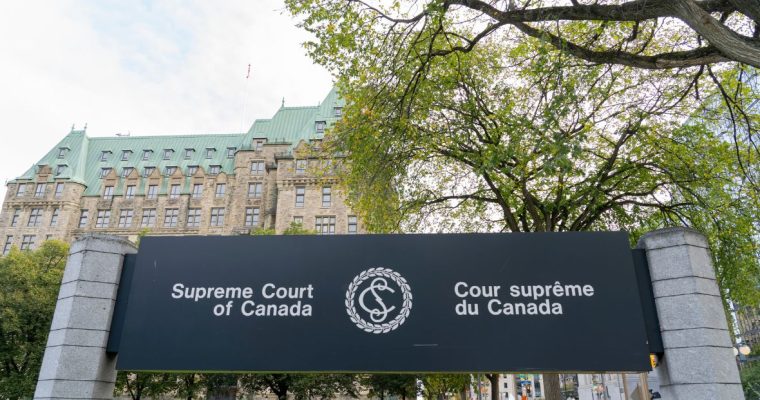
A major factor is a case currently before the Supreme Court of Canada. It examines whether online gambling must remain confined within provincial borders under federal law.
The decision will likely set the limits on how far provinces can go.
If the Court takes a strict view, Alberta’s market would likely function as a closed system similar to Ontario’s. If the ruling is more flexible, it could allow provinces to expand participation beyond their borders, including into other regions where it is permitted.
No decision has been released so far.
What This Could Mean for Alberta Bettors and Market
For players, the impact is most noticeable in games that depend on having enough active users.
For operators, shared liquidity isn’t just a bonus. It can shape how easy it is to attract players, keep them engaged, and grow over time.
Alberta online poker, daily fantasy contests, and other peer-to-peer formats rely heavily on player volume. More participants mean quicker matchmaking, larger prize pools, and more consistent game availability.
Without that scale, those offerings tend to feel limited regardless of platform quality.
If Alberta eventually connects its player base with other jurisdictions, those formats could become much more viable. It could also help regulated platforms compete more effectively with offshore sites. Those sites currently attract players by offering deeper liquidity.
At the same time, none of this is guaranteed. It depends on the court’s decision, how Alberta chooses to apply its framework, and whether other provinces are willing to participate.
Ontario Comparison
Ontario provides a useful reference point. The province generated $82.7 billion in wagers and $2.9 billion in gaming revenue in 2024 to 2025, with millions of active accounts and strong adoption of regulated platforms.
However, it remains a closed system. Players must be located within Ontario to participate, and operators can’t share player pools outside the province.
That approach has delivered strong results, but it also places limits on how far certain types of games can grow.
What Players Should Actually Watch
As Alberta’s market rolls out, a few factors will matter more than anything else.
Where players are allowed to access platforms will determine how open the system really is. Whether player pools are shared will directly affect game availability, especially for poker and similar formats. Promotions will need to compete with offshore platforms that continue to offer larger player bases.
Once the market goes live, players should also pay attention to the application of self-exclusion tools and whether deposits and withdrawals are reliable.
July sets the starting point. What Alberta’s market looks like will depend on how these decisions play out.